MAGNUS.TOWN
:
Touring Northern Spain by car
17 August, 2026
In the summer holidays of 2026, we chose a slightly different holiday than many others, with a rental car through Cantabria, Asturias and Galicia, across the border to Portugal and home through the interior of Spain. It ended up being around 1,900 km in eight days through Northern Spain and Portugal. This part of Spain is quite different from what you might think: green and hilly, steep cliffs facing the sea, small fishing villages. More like Western Norway, just warmer, less rain and with local wine. I naturally brought analogue cameras and many rolls of film on the trip.
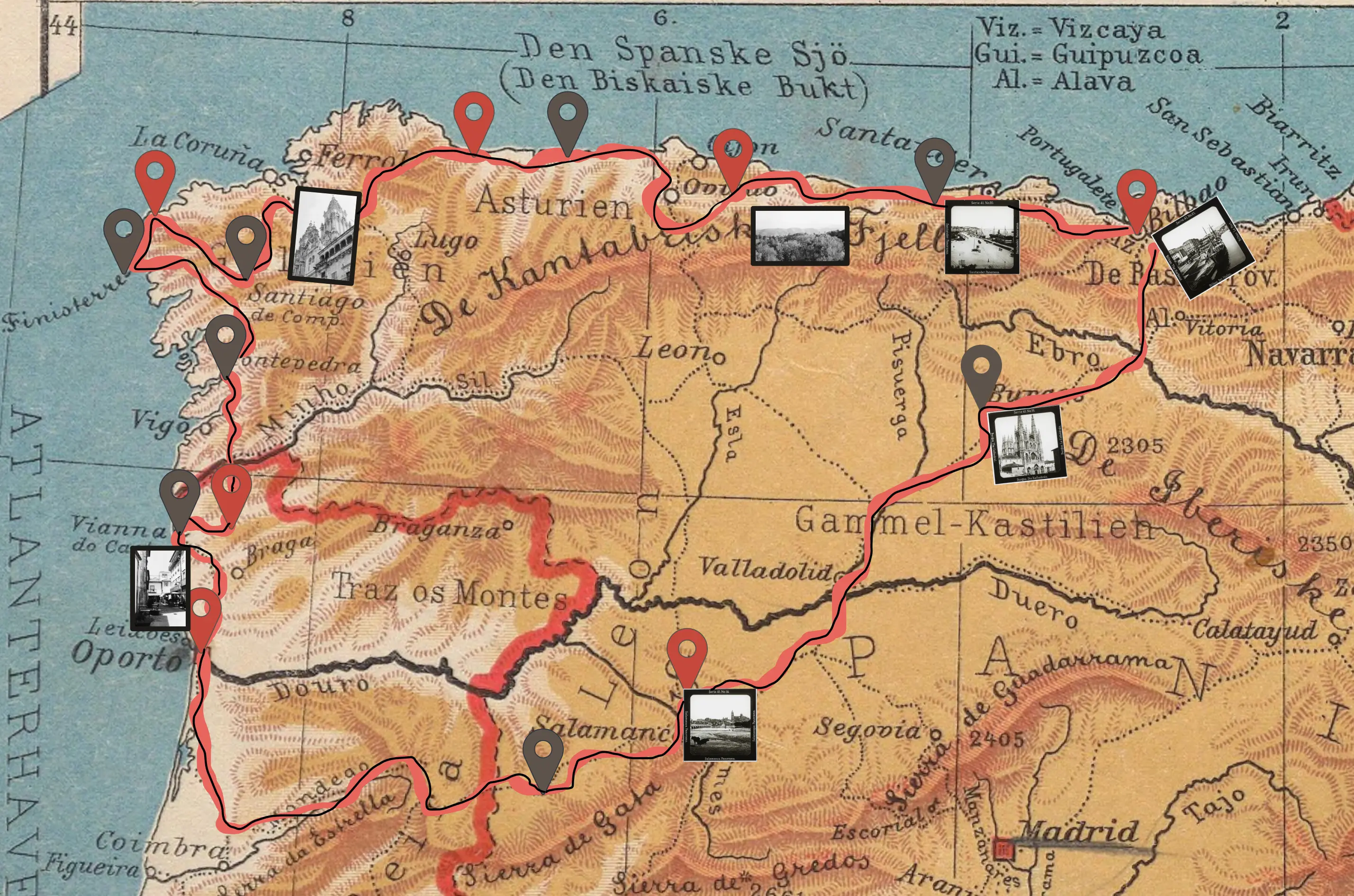
We used Zest Car Rental to compare prices, and collection went absolutely fine. In my opinion it is worth spending a bit of money on a proper company with good reviews so you don't get scammed. I can recommend Zest! We also got a brand new car with only 2,200 km on the clock. The plan was to get out of Bilbao quite quickly, so we drove a fair bit on the motorway at the start. Apple Maps is good to have in Spain. It warns about most speed cameras, roadworks, etc. Portugal has quite a few anonymous cameras too, so watch out there!
First stop was San Vicente de la Barquera in Cantabria. The town is an old fishing village with roots dating back to the Middle Ages, and today the old town is protected as a cultural heritage site. The landmark is Castillo del Rey, a 13th-century royal castle, and the beautiful church of Santa María de los Ángeles, built between the 13th and 16th centuries. Around 80% of the municipality's area is part of the Oyambre Nature Park, and the Picos de Europa rise on the horizon. It was a bit difficult to find parking there, but the multi-storey car park worked fine. Car parks in Spain are a bit different from in Norway, where you take a ticket at the entrance, pay at a machine inside and scan the ticket again when you drive out. We learned it quickly though.
From here we took winding country roads inland to Torazo, which was the first overnight stay. The hotel Hostería de Torazo is situated on top of a hill overlooking green hills in all directions. The village itself is calm and quiet, with well-kept houses and almost no tourists. It was awarded the title of 'Exemplary Village of the Year' by the Prince of Asturias Awards in 2008. Really lovely area.
Day two we drove on along some small roads out to the coastal town of Puerto de Vega, a fishing village with soul. The barely 2,000 inhabitants are known for taking care of their own town, and in 1995 Puerto de Vega won the Prince of Asturias Award for "Exemplary Town of the Year". The townscape is characterised by 19th-century romanticism, which is rare to find in an Asturian fishing village. We had actually planned to go to Cudillero, but it was completely impossible to find parking there, so we found another, slightly quieter place instead. It turned out to be a nice town too! Ate hake in tomato sauce for lunch. I think it's fun to eat something new and ideally local food when on holiday. The second overnight stay was at Refugio O Castro, a hotel located right down towards the cliffs by the sea. The room faced south which was'nt the best view, but we spent a lot of time outside. The tidal difference here is huge, and it was interesting to see the beach transform over the course of a few hours.
Early the next morning, before breakfast, we went to some cliffs along the coast with formations that almost look like cathedrals shaped by the sea, "Praia das Catedrais". It was high tide, so we couldn't get down to the water, but walked a coastal path and enjoyed the view. These stone formations are only accessible at low tide. At this point in the trip, you can see the landscape gradually change from the steep cliffs in Asturias to something flatter in Galicia. One of the advantages of driving rather than flying is that you see the transitions in the landscape better.
Then we drove on to Santiago de Compostela, which is one of Europe's great pilgrimage cities and the end point of the Camino de Santiago. People have wandered here for over a thousand years from all corners of the continent. The drive into Santiago de Compostela was quite a challenge, and roundabouts with traffic lights inside them are apparently a local phenomenon, but a bit challenging for a Norwegian. The cathedral is impressive, but there was a long line to get in, and with children, waiting a long time wasn't an option. Our best experience however was Punto Negro, a local tapas bar with a very friendly host. Ordered drinks, cheese and cured ham and sat watching local Spaniards pop in, have a beer and a chat. Very few spoke English. Places like this are gold!
The third overnight stay was at an Airbnb in Moreira outside Muxía, which is a desolate place right down by the sea. One of the absolute highlights of the trip. Silence, the sea and a jacuzzi in the evening looking north towards the horizon. Cooked in the kitchen and had no itinerary other than relaxing. Could happily have stayed there for two weeks.
The morning after we drove to Cabo Fisterra, or finis terrae, "the end of the earth" in Latin. The Romans believed this was the place where the known world ended and the sea began, into infinity. Not necessarily a huge amount of stuff to see there, but nice to see the view in all directions.
From there on we took the trip towards Pontevedra, which is a cosy town with a church actually built in the shape of a scallop shell: Santuario de la Peregrina from the 18th century. The scallop shell is the symbol of the Camino de Santiago. Ate scallops for lunch, of course.
The fourth overnight stay was in Ponte de Lima. It is the oldest town in Portugal with town status, with a royal charter from 1125. The bridge it is named after is partly from Roman times. Nice little town, which we wouldn't have visited had it not been for an Airbnb. Ate a classic local dish for dinner, which was a kind of cod with mashed potato around it. Really delicious.
Here we learned the Portuguese toll system where you take a ticket at the first toll booth and pay at the next. Messed it up a bit the first time and got the maximum charge, but hey you live and you learn! In Portugal, you also have to be aware that they have a separate toll system with only electronic toll stations too, which we had familiarised ourselves with beforehand. There are several solutions, but "Tollcard" worked fine. Only needed to translate the website to English to order.
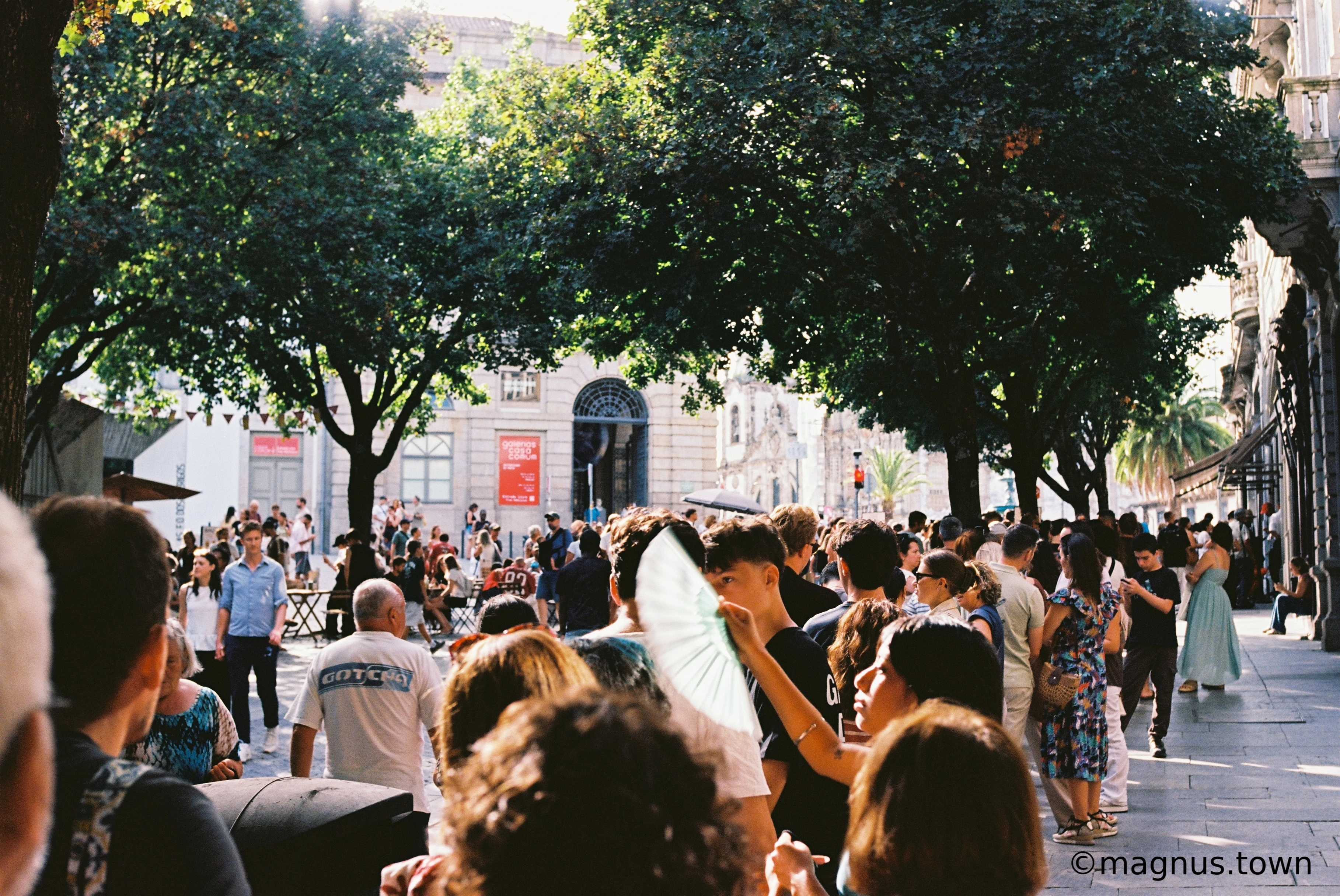
The next day we took a detour via Viana do Castelo on the way to Porto to visit Santuário de Santa Luzia, a basilica that towers 228 metres above sea level with a wide view. There is a funicular up, but we went on foot, like true Norwegians, in almost 30 degrees. Spent almost 45 minutes finding parking because there happened to be a parade and market in town. Total chaos! But things like that are part of the adventure, even if the children might not have thought so right then.
The fifth overnight stay was in Porto. We stayed at an Airbnb slightly outside the city centre with parking. The parking turned out to be a narrow tunnel downwards with 10 cm clearance in a brand new car, which was a bit scary. Uber works excellently in Porto, and it doesn't matter staying a bit outside the centre.
We split the journey home over two days. Stopped for dinner at a Parador. It is a state-owned Spanish hotel chain that runs hotels in historic buildings like monasteries, castles and palaces. Ate baby squid in its own ink. A new experience for me, and tasty! We didn't sleep there, but it would definitely have been nice.
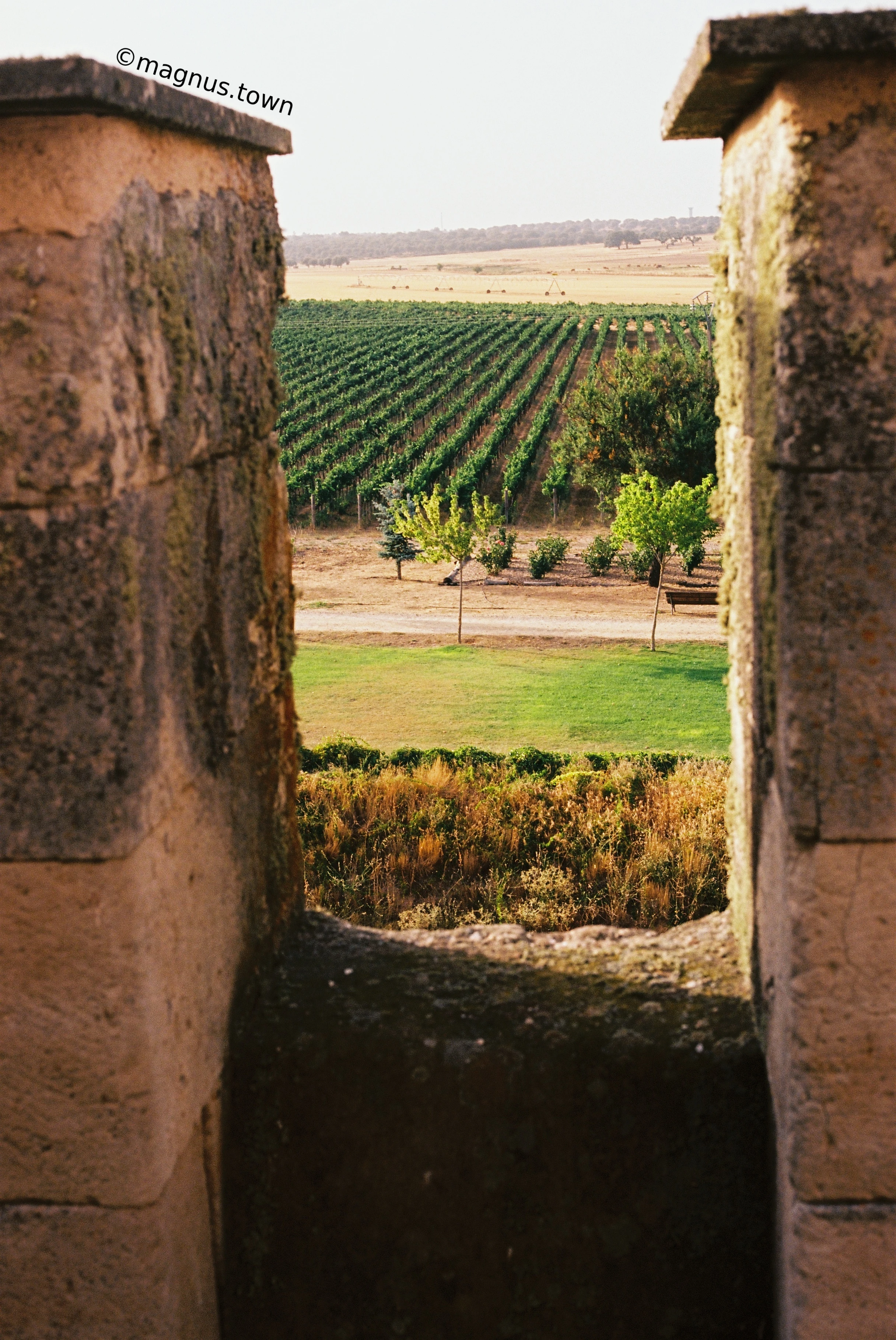
The sixth overnight stay was at Castillo del Buen Amor outside Salamanca, and we had been looking forward to this for a long time. The castle was originally built in the 11th century as a military fortress during the Reconquista, and rebuilt into a magnificent castle-palace in the 15th century by Bishop Alonso de Fonseca. Today it is a hotel and a listed cultural monument, surrounded by 116 hectares of forest and its own vineyards. Enjoyed local wine from the hotel with grilled ibérico pork. Spínola dessert wine and tiramisu for dessert! Best food on the trip I would say. The landscape here is completely flat, with large plains in Castilla y León, completely different from the coastline we came from.
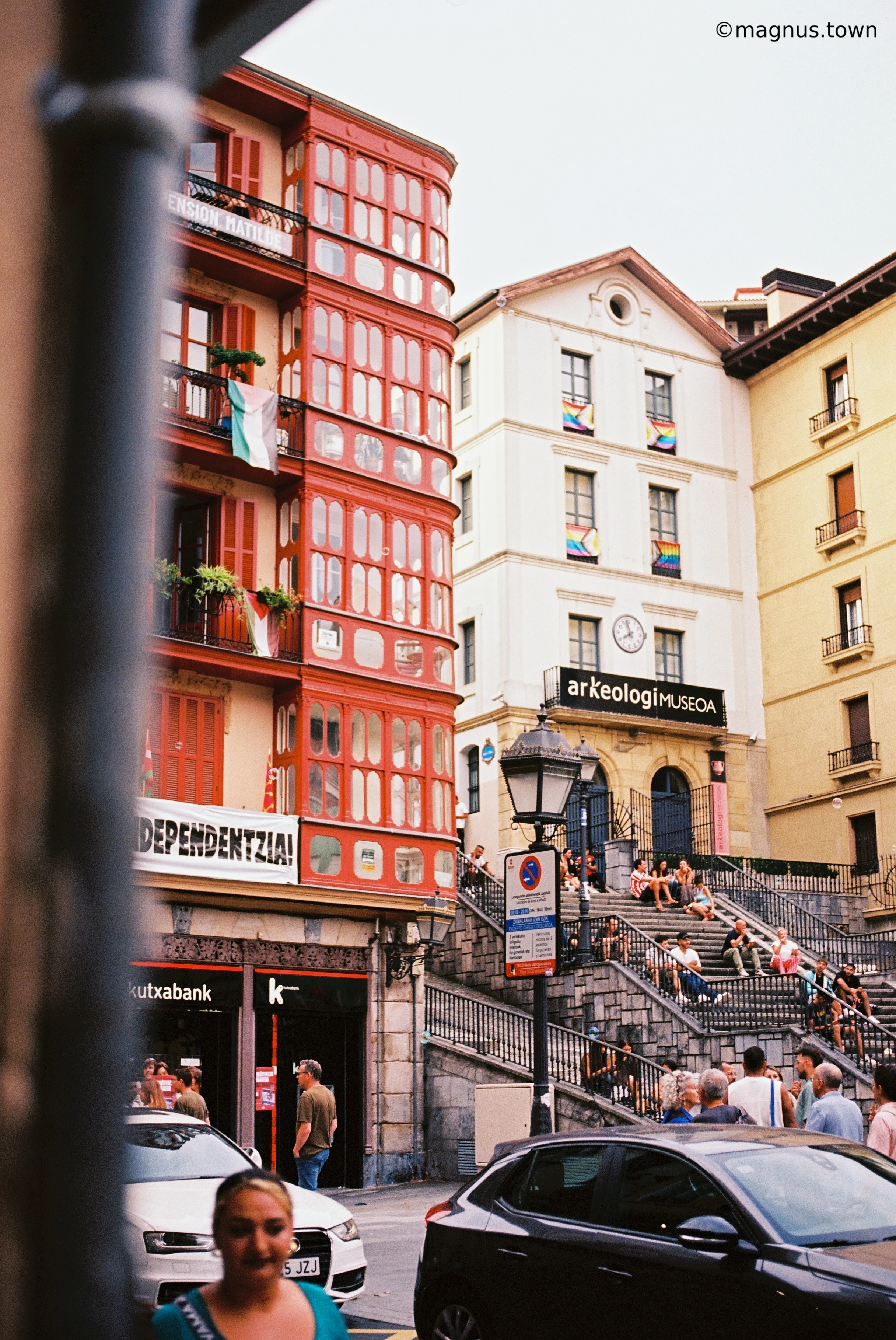
The last day ended with a stop in the old town of Burgos. It was one of the most important cities in medieval Spain, and for five centuries the capital of the united Kingdom of Castile and León. The cathedral, Santa María de Burgos, started in 1221, is one of Spain's finest examples of Gothic architecture and is today on the UNESCO World Heritage list. It is also the burial place of El Cid, Spain's most famous knight from the Reconquista. We took a final night in Bilbao before travelling home the day after. The old town in Bilbao is nice, with narrow streets and tall buildings in various colours. However it is a bit big for my taste, I preferred the smaller and quieter places along the coast.
Returning the rental car was completely straightforward. Tip: Fill the tank at a station a bit outside the airport; the ones closest to the airport are always full of people needing to fill their rentals.
Some practical tips if you are considering a similar trip: Apple Pay (with Revolut) worked fine everywhere. If you bring analogue film, it's a good idea to bring a bag marked "hand check". The one by handcheckfilm.com also had spanish text on the outside which helped a lot, and in the end the film was checked by hand at the airport to avoid X-rays that can ruin the film. It can also be smart to bring your own travel towels, so you can swim in between AirBnB/Hotels.
What we would have done differently: A shorter round trip with more time in each place. Ideally two nights rather than one, or one fixed base and day trips out from there. It's a shame to leave a place just as you are starting to settle in.
All the shots here are taken with my Kodak Retina IIc using ektar 100!