
MAGNUS.TOWN
:
Random notes about hunting birds
17 September, 2025
This is just me spending an afternoon writing down a few things I know about hunting that others may find useful. If I can think of someting more I will update this page, but this is what I have for now.
I’ve spent the most hunting days hunting birds. I’ve learned a couple of practical things and read stuff along the way. Some in textbooks, online, heard from others, forums etc. In the end I have found what works well for me and though I might share it with someone else that finds this.
Hunting birds is low effort compared to hunting big game and can be done without too much planning. I’ve had nice autumn trips with my dad, and a handful of memorable solo trips as well. Tynset had a cabin with an excellent view and free of deer ked (Lipoptena cervi it is called, idk the proper word for it but we say hjortelus). Did not get any birds there except a handful situtions where I took some shots. Kongsvinger where there was more birds, but also more deer ked. Last year I stayed a weekend in Jevnaker, which gave me two birds and a nice night outside in a tent. Along the Swedish border I had a trip where I saw a huge capercaillie simply stood in the middle of the road in front of my car. I didn’t shoot as I was inside my car and outside my permit area. That one really lives in the danger zone being that bold in the start of the hunting season!
Preparations
Deer ked can definitly ruin a trip, so take that into account when you pick where to hunt. If you stay in a tent or in a cabin close to the terrain, you get out early and that is a big advantage.
- Chokes: If you use chokes, pick and tighten them before you leave home. Match choke to ammunition and test it. I’ll put the more open choke in the bottom barrel (first shot) and the tighter one up top. Maybe cylinder and improved cyldinder, but it depends.
- Ammunition: My old favorite was Federal Prairie Storm 12/76. Brilliant ammunition, but lead is basically illegal for normal use in Norway these days. I tried steel last season and it killed two birds in the end, but one only had a broken wing and was still alive when I reached it. I dont want them to suffer so I am not going to use steel any more. Alternatives to lead is also expensive (roughly 40–50 NOK a shot where I buy it). For most of my hunting I run a 12/76 with Norwegian #4 shot, and it’s worked fine even on ptarmigan
- Carrying: I never use a sling. It sounds odd, but a sling tends to get in the way actually. You learn to carry the gun and gun safety becomes second nature. Break the gun when you cross water, unload when passing people, keep the muzzle sensible at all times etc etc. When hunting birds without a dog, you often have literally a second or two before the chance is gone.
Støkkjakt as we say in Norway
Hunting without a dog is just walking and paying attention. There isn’t a magic trick. You kind of learn where birds like to sit, but mostly they’re where they want to be. Thick forest make everything messy and sometimes you hit a bird and can’t find it. So a bit more open terrain is nice. Last season I shot at one from maybe 30–40 m; it fell, then ran across a bog. My shutgun has ejectors, so I got a quick reload and fired again but the bird kept running. I reloaded and fired twice more, it still ran. What is this bird made of! I finally caught up and finished it before it reached cover. I probably looked like a lunatic out there, but luckily no one else was watching. If it had made the trees I would have lost it.
When it comes to movement in the terrain is where you can improve somewhat I think. Some skill in the hunt is how and where you move, but a lot is just random. How I think of it is just to try and move as random as possible. The birds are used to people walking past, so they just sit still and hide in the terrain. If they think you spot them, they fly away even if you don't see them at all. Just walk outside the tracks of course, but also try and just move random when it both comes to direction and pace. Random turns, sudden stops, run on a hilltop then come to a sudden stop are some examples of the stuff I do.
Personally I do not use hearing protection on this type of hunting. 12/76 is really loud and not good for my hearing, but hearing protection, even active ones are not suitable for this type of hunting. It is also louder in the forrest that it is on the montain. First of all it is really sweaty and damp, second you hear too much or too little stuff around you. Passive is too quiet and active ones are too loud so you hear every branch and step. This is important when you don't know where the bird is, like when hunting with a dog.
Location and timing
Birds move in the grey light. For me the sweet window is morning about 06:00–09:30 depending on the calendar, and evenings around 16:00–18:30. If the sun comes out the birds will warm up and drop to the ground to feed, which often gives you a chance. Sometimes they eay sand as well, so I often see them close to roads or openings in the forest where there is sand or small rocks.
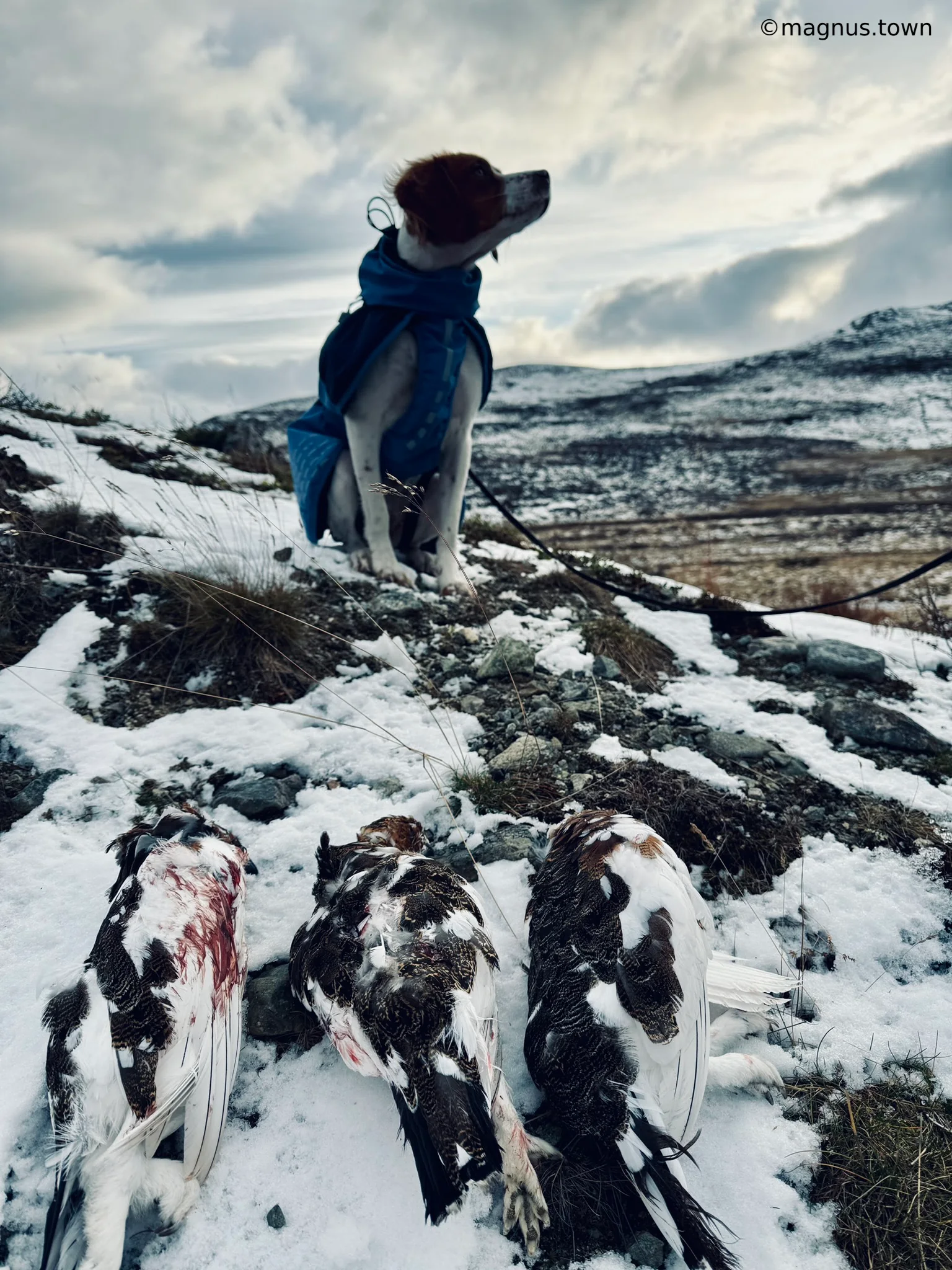
The birds are just in random locations all the time, however you can generally say that capercaillie like dense, nutrient-rich young forest and thick spruce with herbs on the ground. While black grouse prefer more open areas, with berries and nearby bogs. Also remember that they have to eat gravel or sand to digest their food, so gravel roads can be a nice place as well.
You can write page up and page down about where the birds are etc. but as long as you know the approximate area, they can be anywhere. They sell the permits for a reason, so just go there, walk around and be ready within 1 second.
Most important thing of the whole trip is to bring some steep coffee that is brewed over a fire. Especially with freshly grounded beans, this is just so nice. Remember to use a kettle that can handle the heat, not all types kettles can handle that and releses some sort of toxic I think.
I shot a bird, what now?
If you get lucky, treat the bird properly from the start. I put birds in a game bag and either hang them if it’s cool, or carry them on the pack if it’s warm. This varies but I gut before aging. The ambient temperature controls how long you can age the meat. Also, don’t let it hang in a wet place, keep it dry.
- Over 10 °C: only 2-3 days
- 5–10 °C: about a week
- 1–5 °C: up to two weeks
- Below 0 °C: it just freezes and won’t tenderize further
I have this rack in my fridge where I can have bottles of wine, but for me this is an excellent spot for hanging birds to tenderize. Remeber to hang then from the neck. You can buy specific gear for this. If it is too warm outside I take some racks in my fridge out and let the birds hang in there for a week or so. For freezing, wrap tight in foil and plastic this keeps it very well.
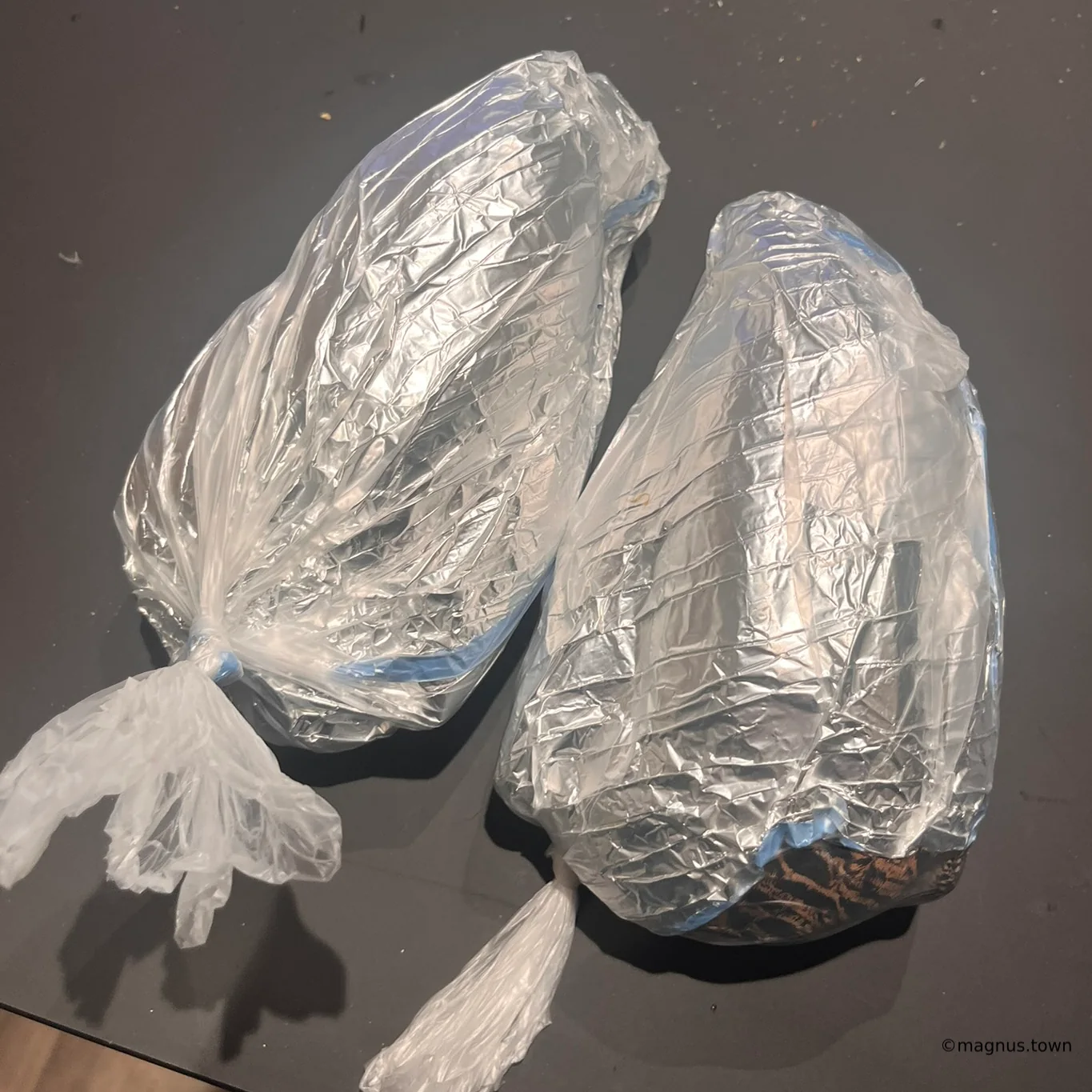
Cooking is worth the trouble and I really find it rewarding when I shot the bird myself. I thaw birds in the fridge for two days before I am going to eat them. How I deal with them next is to plunge them in water, cut the neck, legs and wings off with a scissor. Starting from the belly you can just rip the skin and feathers around the bird. The back is always stubborn, but patience and force is what gets you there. Use a good knife and be pacient and cumbersome while cutting out the breasts. Put them on the side while making sauce. I then fry the carcass and bones in butter and simmer with celery root, carrot and leek for about twenty minutes for a stock. Don’t go much longer than 25 minutes or it turns bitter. I ususally do around 20. Make sure you use enough water to cover most of it while simmering. After you have separated the stock from the rest of the bones, reduce it to about half a litre.
For the breasts I bring them to room temperature, pan-sear in good butter, baste often and use a thermometer (56-58 °C internal). Let rest some time...
Sauce-wise I keep it simple and a little Norwegian: make a roux (butter + flour), mix in about 4 dl of the reduced stock, add crushed juniper, simmer ten minutes. Then stir in a splash of sour cream of good quality, a thin slice or two of brown cheese, a spoonful of lingonberry. If you have mushrooms just dry-fry them until they stop steaming so they don’t water the sauce and add them in the end. I use soy sauce instead of plain salt for color and depth. If you like it thicker, a little corn-starch will do the trick. Serve with mashed potatoes and something green like brussels sprouts. Remember to check the meat carefully for stray pellets before you eat.
Useful?
These are just some of the things that was on the top of my head now. Keep it simple with some solid fundamentals and you are good. Sometimes you walk away with nothing, sometimes you get lucky, and sometimes the memory of a quiet morning or an enormous capercaillie in the middle of the road and quiet forest is the best part of the whole trip. Be sensible, be safe, and enjoy the time out there. The bird will be there eventually.